


Mung bean
The beneficial properties of mung beans are illustrated by their vitamin content. Additionally, mung beans are very rich in potassium, calcium, magnesium, phosphorus, copper, manganese, iron and zinc. It is high in vegetable protein and low in fat, making it a powerful protein source for weight watchers.
Green mung beans taste like other beans, but their sweet and nutty notes have an oriental accent. As an integral part of oriental cuisine, the product is a part of the national dishes of India, Asia, Japan and China. In Europe mung bean is a particularly valuable ingredient in low fat and vegetarian menus. It is popular in curry, kichari, dala and salads made with bean sprouts.
Three facts about organic mung beans:
- The concentration of nutrients in mung bean increases in its seedlings. To germinate the beans, they must be rinsed and soaked in warm water (20°C). The seedlings will begin to appear in 10-12 hours. Seedlings up to 10 mm provide the maximum benefit. Clean them of exfoliated green husks before using.
- Mung beans are famous for its antioxidant, anti-inflammatory and antiviral properties. Their regular use helps to remove toxins and harmful substances from the body, as well as to normalize blood cholesterol levels. Due to the phytoestrogens in its composition, the product has a rejuvenating effect on the body. Mung beans improve digestion thanks to their high soluble fiber content.
- Maash is known in the world as "mung beans" (in Hindi), "golden beans" (Latin Phaseolus aureus) or "green beans" (in China). Unlike most of the known legumes, they are easy to digest and do not cause flatulence. The small beans cook much faster without the need to soak them first.
| Nutrition value | |
|---|---|
| Calories | 333 kcal |
| Proteins | 23,4 g |
| Fats | 1,6 g |
| Carbohydrates | 60,0 g |
| Dietary fibres | 18,3 g |
| Water | 10,08 g |
| Ash | 3,36 g |
| Saturated fatty acids | 0,63 g |
| Vitamins | |
| Vitamin PP | 1,45 mg |
| Vitamin B1 (thiamine) | 0,27 mg |
| Vitamin B2 (riboflavin) | 0,25 mg |
| Vitamin B5 (pantothenic acid) | 0,91 mg |
| Vitamin B6 (pyridoxin) | 0,28 mg |
| Vitamin B9 (folic acid) | 216 mcg |
| Vitamin PP (B3, niacin equivalent) | 5,83 mg |
| Macroelements | |
| Calcium | 138 mg |
| Magnesium | 267 mg |
| Sodium | 38 mg |
| Potassium | 983 mg |
| Phosphorus | 379 mg |
| Microelements | |
| Iron | 7,57 mg |
| Zinc | 3,35 mg |
| Iodine | 12,1 mcg |
| Copper | 0,98 mcg |
| Manganese | 1,53 mg |
| Selenium | 8,2 mcg |
| Information on product weight: | |
| Glass 250 ml = 210 g (699,3 kcal) | |
| Glass 200 ml = 170 g (566,1 kcal) | |
| Tablespoonful (heaped spoon, except liquid products) = 25 g (83,25 kcal) | |
| Teaspoonful (heaped spoon except liquid products) = 8 g (26,64 kcal) | |
Chemical composition of a product is characterized by calories, proteins, fats, carbohydrates, dietary fibres and vitamins. For organic products, these parameters significantly depend on natural factors – air temperature and precipitation during vegetational season, dry or rainy season, geographic latitude and longitude of cultivation, botanical grain varieties, and soil type. It is impossible to foresee all the factors, so these values are average and indicative only.
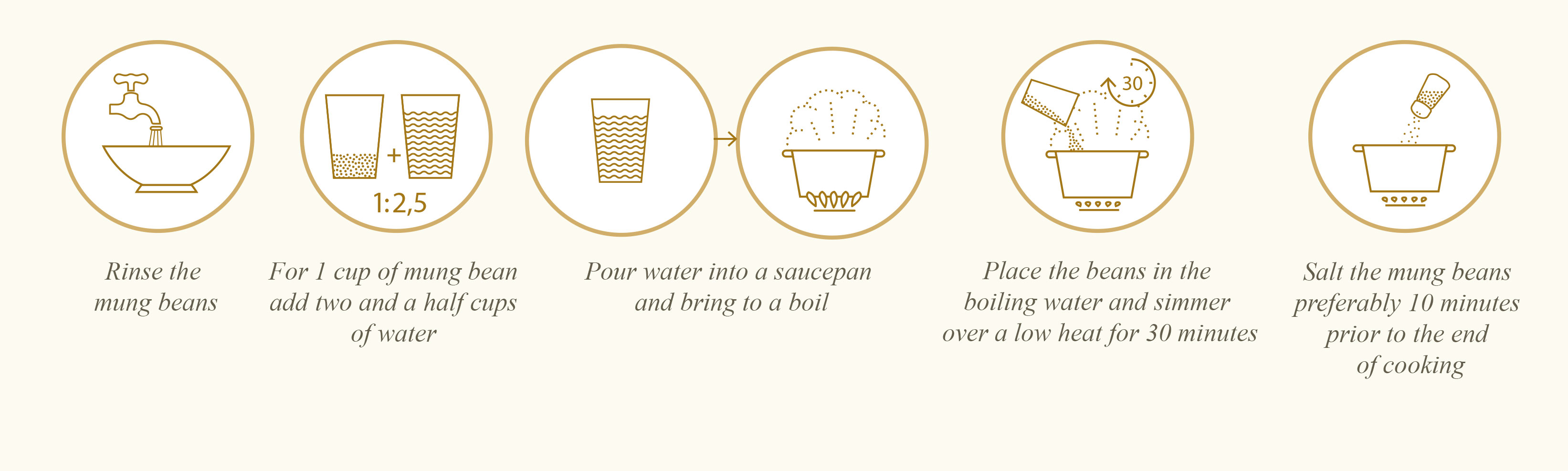
Preparing mung beans is easy
Healthy recipes with organic mash
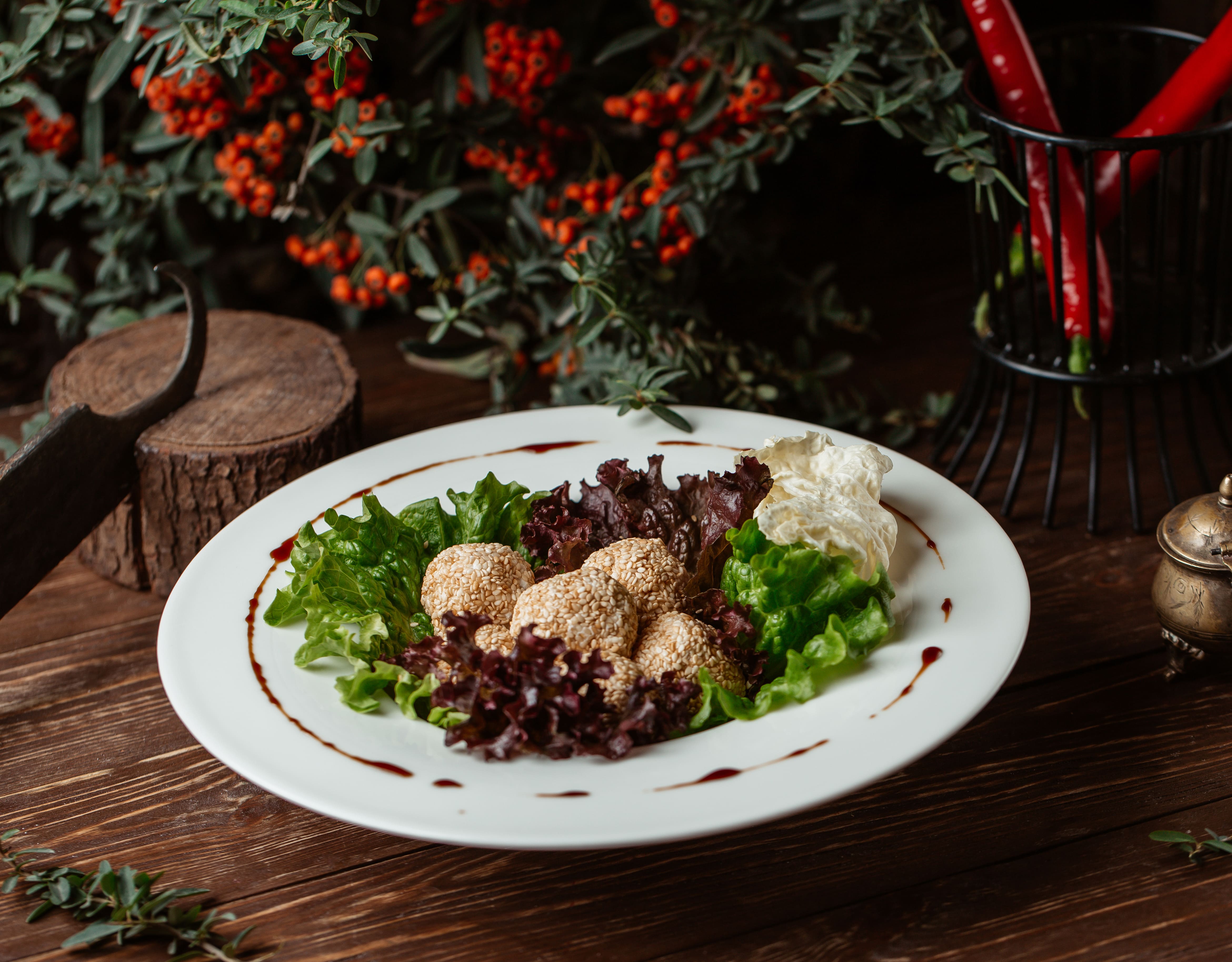
Mediterranean meatballs from mung beans
Preparation: Preheat oven to 180 C. In a separate small container, mix the flax seeds with three tablespoons of water, let it stand for 10 minutes. In a medium bowl, blend the boiled mung beans with a blender or fork. Add the olives, onions, garlic, dried tomatoes, parsley, spices, tomato sauce, and jellied flaxseed. Stir. Form the mixture into small balls and place spaced evenly on a baking sheet covered with baking paper. Bake in the oven for 20 minutes, then turn the meatballs over and bake for another 5-10 minutes until golden brown. Serve warm or cold with pasta or vegetables.
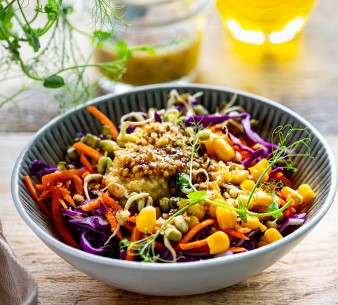
Germinated mung bean salad
Preparation: Cut vegetables into cubes, add mung bean sprouts. Season the salad with spices and lemon juice before serving.