


Pea
The high proportion of vegetable protein makes organic peas a great alternative to meat in vegetarian diets. Pea fiber normalizes the functions of the digestive tract and helps remove toxins.
Organic peas are completely natural legumes, without GMOs and any artificial additives. Its quality meets the strict requirements of the EU for organic foods, as certified by the Organic Standard UA-BIO-108 certificate.
Three facts about organic peas:
- Yellow peas are rich in essential amino acids, vitamins and minerals that are involved in many metabolic processes. Due to the large amount of folic acid (vitamin B11) in its composition, peas are recommended to be used in order to normalize hematopoiesis and create new cells. Tryptophan is required by the body for the production of serotonin. It is called a natural relaxant, which together with vitamin B1 promotes good moods, and helps in the fight with insomnia and depression. Thiamin (vitamin B1) is essential for the health of the brain and nervous system.
- Eating peas has a positive effect on cholesterol levels and reduces the risk of heart disease. This legume has a relatively low glycemic index. Its slow-digesting carbohydrates (starch) prevent spikes in blood glucose and ensure fullness for a longer period.
- Split yellow peas are those which after grinding, are split in half along the natural seam for quick preparation. There is almost no moisture in them, since they were dried earlier. Thus before cooking, they are to be soaked in cool water for at least 1.5-2 hours.
| Nutrition value | |
|---|---|
| Calories | 323 kcal |
| Proteins | 23,0 g |
| Fats | 1,6 g |
| Carbohydrates | 60,7 g |
| Dietary fibres | 25,5 g |
| Water | 11,27 g |
| Ash | 2,65 g |
| Saturated fatty acids | 0,16 g |
| Vitamins | |
| Vitamin PP | 2,89 mg |
| Vitamin B1 (thiamine) | 0,73 mg |
| Vitamin B2 (riboflavin) | 0,22 mg |
| Vitamin B5 (pantothenic acid) | 1,76 mg |
| Vitamin B6 (pyridoxin) | 0,17 mg |
| Vitamin B9 (folic acid) | 274 mcg |
| Vitamin C | 1,8 mg |
| Vitamin PP (B3, niacin equivalent) | 7,47 mg |
| Macroelements | |
| Calcium | 55 mg |
| Magnesium | 115 mg |
| Sodium | 15 mg |
| Potassium | 981 mg |
| Phosphorus | 366 mg |
| Microelements | |
| Iron | 4,43 mg |
| Zinc | 3,01 mg |
| Copper |
0,8 mcg |
| Selenium | 1,6 mcg |
| Information on product weight: | |
| Glass 250 ml = 210 g (678.3 kcal) | |
| Glass 200 ml = 170 g (549.1 kcal) | |
| Tablespoonful (heaped spoon, except liquid products) = 25 g (80,75 kcal) | |
| Teaspoonful (heaped spoon except liquid products) = 8 g (25.8 kcal) | |
Chemical composition of a product is characterized by calories, proteins, fats, carbohydrates, dietary fibres and vitamins. For organic products, these parameters significantly depend on natural factors – air temperature and precipitation during vegetational season, dry or rainy season, geographic latitude and longitude of cultivation, botanical grain varieties, and soil type. It is impossible to foresee all the factors, so these values are average and indicative only.
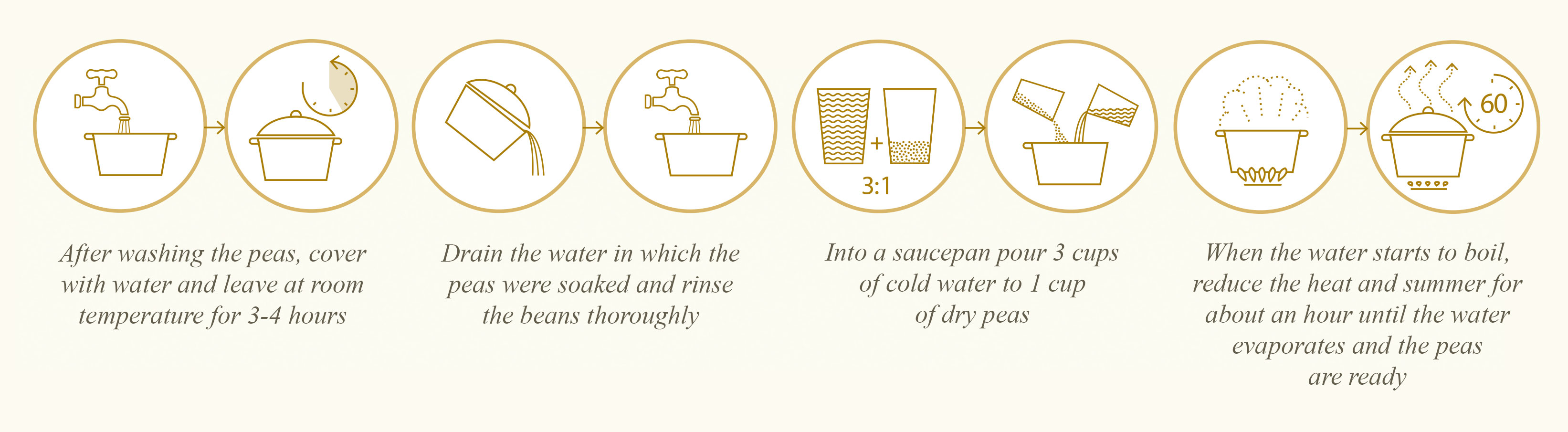
Preparing organic peas is simple
Healthy recipes using organic peas

Creamy pea soup with cream
